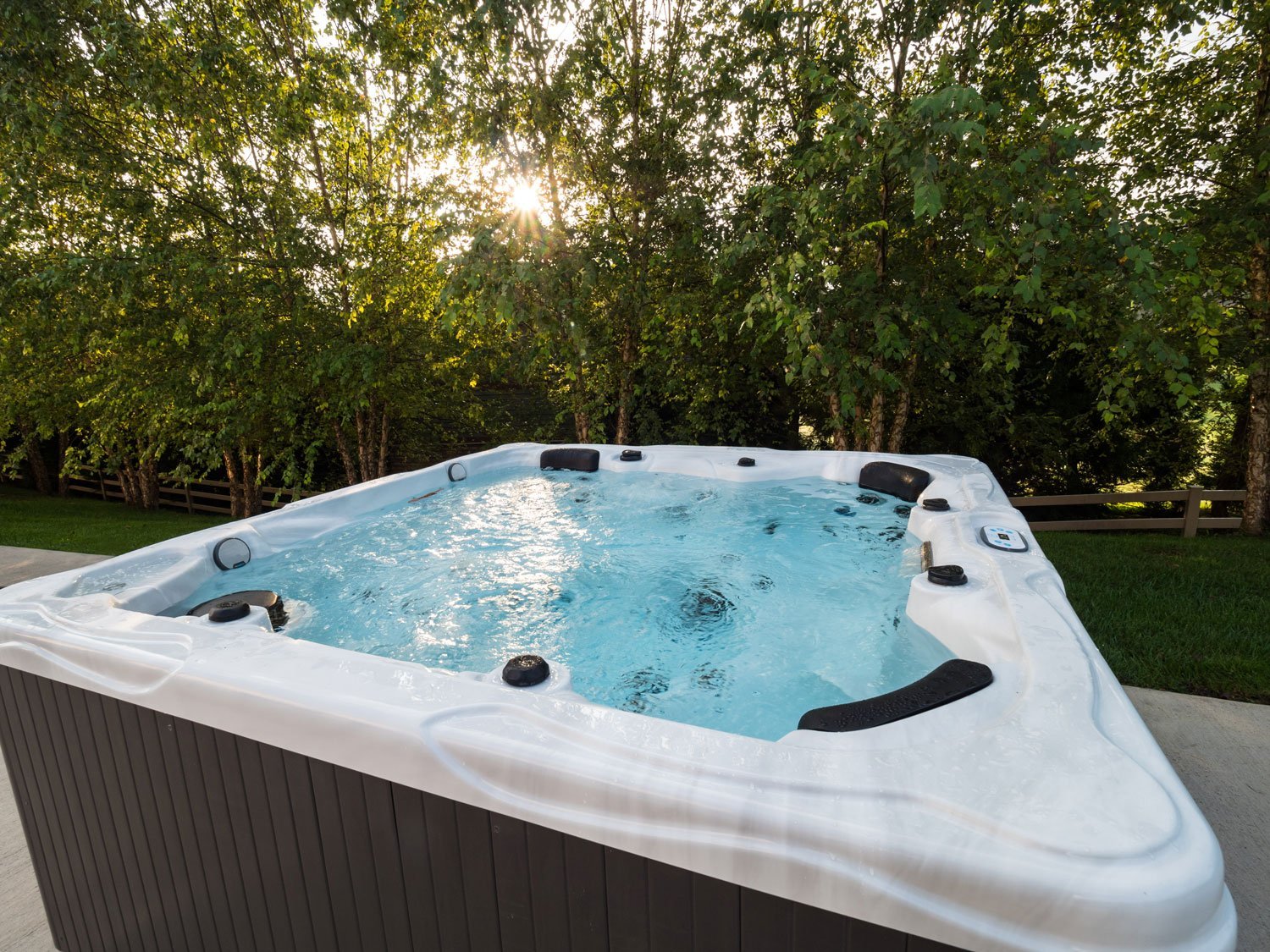
The development of new technology and scientific studies on the medical benefits of hot tubs has led to the expansion of a wide new market: the use of hot tubs for hydrotherapy and medical relief from joint pain, arthritis, and other chronic conditions. The guide below offers insights on how hot tubs can be used for hydrotherapy, who benefits most from these use cases, the results of hydrotherapy by condition, and popular models of hot tub for those looking for hydrotherapy.
The Basics of Hydrotherapy
Hydrotherapy is a method of treating medical symptoms related to a variety of conditions by using water [1]. A common alternative treatment for various muscle and joint disorders, hydrotherapy uses water to massage and relax the body, reducing the weight load on joints by about 90% due to the buoyancy of water [2]. In particular, heated water is a primary source of hydrotherapy due to the benefits of heated water for circulation, muscle relaxation, and increasing pain thresholds.
Generally hydrotherapy advocates, including medical professionals, recommend 15-30 minute sessions in a hot tub at a temperature of 98-104°F for ideal hydrotherapy. Scientific studies back the numerous health benefits of hot tub hydrotherapy, including muscle recovery, pain relief, improved sleep, better circulatory and respiratory health, and reduced joint stiffness, among others [3].
Who Uses Hot Tubs For Hydrotherapy?
People around the world use hot tubs for a variety of reasons, and everyone has different needs when it comes to hot tubs. Insights into the hot tub market suggest that the vast majority of hot tub users are residential homeowners who use their tubs for relaxation and stress relief. Smaller subsets of the hot tub consumer base utilize their tubs exclusively for hydrotherapy and pain management, while others use them for adjacent medical interests such as sleep improvement [5].
Number of Hydrotherapy Patients That Use Hot Tubs
According to the CDC, approximately 53 million Americans suffer from arthritis, one of the most common joint conditions benefited by hot tub hydrotherapy [6]. While it’s not known exactly how many hydrotherapy patients use hot tubs, the global market for hydrotherapy is growing, being valued at $3225.32 million as of 2024 and being projected to grow in value to $5709.6 million by 2032 [7]. This growth correlates to an expected increase in demand for hydrotherapy-specific hot tubs, which offer benefits such as stress reduction, muscle ache relief, improved heart health, lower blood pressure, and better sleep [8].
Common Conditions Treated By Hydrotherapy
| Condition | Hydrotherapy Target |
| Arthritis, Osteoarthritis, and Rheumatoid Arthritis |
|
| Fibromyalgia |
|
| Ankylosing Spondylitis |
|
| Stroke |
|
| Parkinson’s Disease |
|
| Multiple Sclerosis |
|
| Sports Injury |
|
Hydrotherapy is a common form of medical therapy for a variety of conditions, including arthritis, fibromyalgia, ankylosing spondylitis, stroke, Parkinson’s Disease, multiple sclerosis, and sports injuries. Hydrotherapy aims to treat medical conditions with focused water massage, and hot tubs use a variety of meticulously-placed pulsating and massaging jets to contact affected muscles and body parts for healing and symptom management. The effects of warm water on blood circulation are believed to tie into the cause behind hydrotherapy effectiveness, as warm water facilitates blood flow to the muscle and promotes pain relief [9].
Hydrotherapy Results By Condition
| Condition | Pain Improvement With Hot Tub | Mobility Improvement With Hot Tub |
| Osteoarthritis | 82% | 70% |
| Fibromyalgia | 60% | 55% |
| Rheumatoid Arthritis | 65% | 58% |
| Ankylosing Spondylitis | 55% | 62% |
Hot tub hydrotherapy is estimated to result in anywhere from a 55%-82% reduction in pain and a 55%-70% improvement in mobility across various conditions. [10][11][12][13][14][15][16]. Hydrotherapy is noted to be particularly effective as a long-lasting therapy because it is easy and relaxing to perform and can be done daily. Studies even show that hydrotherapy can sometimes lead to a significant reduction in the need for medication [12], suggesting its usefulness as an alternative to pharmaceutical treatment.
Popular Hot Tub Models and Brands For Hydrotherapy
| Model | Brand | Price |
| G-6 Tranquility Spa | Dr. Wellness | $6,999-$12,899 |
| Catalina Carlton | Catalina | $10,999-$18,499 |
| G-14 Tranquility Spa | Dr. Wellness | $8,999-$15,999 |
| G-2 Tranquility Spa | Dr. Wellness | $4,999-$8,899 |
| X-6 Spa | Hudson Bay | $5,999-$10,499 |
| X-3 Spa | Hudson Bay | $4,899-$8,499 |
Various hot tub dealers offer hot tubs designed specifically for hydrotherapy, presenting customers with a variety of choices in terms of function and price. Popular hot tub brands for hydrotherapy include Dr. Wellness, Catalina, and Hudson Bay.
Dr. Wellness
Dr. Wellness manufactures an extensive range of hot tubs and spas that are energy efficient and noted for being able to relieve stress, improve sleep, soothe aching joints and muscles, and improve circulation. Dr. Wellness tubs’ also conserve electricity, come with an excellent warranty, and have customizable features.
Catalina
Catalina Spas is a major manufacturer of luxury spas with higher price points, but superior features and hydrotherapy support. Their quality construction guarantees years of performance and exquisite luxury, offering a complete package of entertainment and medical relief.
Hudson Bay
Hudson Bay Spas manufactures convenient and powerful hot tubs that offer the performance of higher-voltage spas without the energy and installation costs. Their spas are also engineered to offer various health benefits, including muscle massage and rapid healing promotion.
Conclusion
Hot tub hydrotherapy is a major source of relief for sufferers of arthritis, joint pain, and many other conditions. If you’re looking for an effective hydrotherapy hot tub, Aqua Living offers a wide variety of hot tubs for various levels of hydrotherapy, ensuring that you can stop wasting time enduring arthritis or joint pain and start healing and relaxing.
Sources
- Professional, C. C. M. (2025, November 5). Hydrotherapy. Cleveland Clinic. https://my.clevelandclinic.org/health/treatments/23137-hydrotherapy
- Impadmin. (2024, July 30). How hot tubs aid in pain Management | Lifestyle Outdoor. Lifestyle Outdoor. https://www.lifestyleoutdoor.com/how-hot-tubs-can-help-with-pain-management/
- Resetstaginstg. (2025, July 10). Are hot tubs good for you? What you need to know + the Science-Backed Benefits. RESET | Mind & Body. https://resetmindbody.com/blog/are-hot-tubs-good-for-you-what-you-need-to-know-the-science-backed-benefits/
- Hot Tub Market Size, share, and Industry Insights [2032]. (n.d.). https://www.skyquestt.com/report/hot-tub-market
- 7 benefits of soaking in a hot tub. (2024, October 9). Healthline. https://www.healthline.com/health/hot-tub-benefits
- Arthritis. (2024, June 3). Chronic Disease Indicators. https://www.cdc.gov/cdi/indicator-definitions/arthritis.html
- Bisht, S. (2025, May 26). Hydrotherapy and Aquatic therapy market. Credence Research Inc. https://www.credenceresearch.com/report/hydrotherapy-and-aquatic-therapy-market
- Clinic, C. (2025, November 17). Soak It In: How hot tubs can boost your health. Cleveland Clinic. https://health.clevelandclinic.org/benefits-of-hot-tubs
- Becker, B. E., Hildenbrand, K., Whitcomb, R. K., & Sanders, J. P. (2009). Biophysiologic Effects of Warm Water Immersion. International Journal of Aquatic Research and Education, 3(1), 4. https://scholarworks.bgsu.edu/cgi/viewcontent.cgi?article=1398&context=ijare
- Verhagen, A. P., Bierma-Zeinstra, S. M., Boers, M., Cardoso, J. R., Lambeck, J., De Bie, R., & De Vet, H. C. (2007). Balneotherapy for osteoarthritis. Cochrane Database of Systematic Reviews, 4, CD006864. https://doi.org/10.1002/14651858.cd006864
- Protano, C., Fontana, M., De Giorgi, A., Marotta, D., Cocomello, N., Crucianelli, S., Del Cimmuto, A., & Vitali, M. (2023). Balneotherapy for osteoarthritis: a systematic review. Rheumatology International, 43(9), 1597–1610. https://doi.org/10.1007/s00296-023-05358-7
- Mao, S., Xiao, K., Zhou, W., Xu, H., & Zhang, S. (2023). The Impact of Hot Spring Hydrotherapy on Pain Perception and Dysfunction Severity in Patients with Chronic Low Back Pain: A Systematic Review and Meta-Analysis. Journal of Pain Research, Volume 16, 3925–3944. https://doi.org/10.2147/jpr.s438744
- Yıldırım, N., Ulusoy, M. F., & Bodur, H. (2010). The effect of heat application on pain, stiffness, physical function and quality of life in patients with knee osteoarthritis. Journal of Clinical Nursing, 19(7–8), 1113–1120. https://doi.org/10.1111/j.1365-2702.2009.03070.x
- Karagülle, M., Kardeş, S., & Karagülle, M. Z. (2018). Long-term efficacy of spa therapy in patients with rheumatoid arthritis. Rheumatology International, 38(3), 353–362. https://doi.org/10.1007/s00296-017-3926-8
- Mooventhan, A., & Nivethitha, L. (2014). Scientific evidence-based effects of hydrotherapy on various systems of the body. North American Journal of Medical Sciences, 6(5), 199. https://doi.org/10.4103/1947-2714.132935
- Water therapies for arthritis pain. (2023, August 16). https://www.arthritis.org/health-wellness/treatment/complementary-therapies/natural-therapies/water-therapies